Maternal Nutrition: Evidence-Based Guidance for Prenatal and Postnatal Care
← Back to Articles

Maternal Nutrition: Evidence-Based Guidance for Prenatal and Postnatal Care

Why Maternal Nutrition Shapes Two Lives at Once

Pregnancy and the months that follow are the only time in human biology when one body's nutrition directly builds another. Maternal nutrition isn't a single checklist you complete once — it's a moving target that shifts from trimester to trimester and continues to matter long after delivery, through recovery and breastfeeding. Getting it right protects fetal development, reduces pregnancy complications, and gives the mother's own body the resources it needs to heal.

This guide breaks maternal nutrition into its two natural phases — prenatal (during pregnancy) and postnatal (after birth) — and explains what to supplement, when, and why, in plain language.

Maternal Nutrition During Pregnancy

The Prenatal Phase: Building Blocks for a Healthy Pregnancy

During pregnancy, nutrient demand rises faster than appetite usually does. A handful of nutrients consistently make the difference between adequate and optimal prenatal nutrition:

  • Folate / Folic Acid: Critical for neural tube formation in the first weeks of pregnancy, often before a woman knows she's pregnant.
  • DHA (Omega-3): Structural fat for the developing fetal brain and eyes, especially in the third trimester.
  • Iron: Supports the expansion of maternal blood volume and prevents pregnancy anemia.
  • Calcium: Builds fetal bone and teeth while protecting maternal bone density.
  • Protein: Supplies the amino acids needed for placental and fetal tissue growth.
  • Iodine: Supports fetal thyroid function and early brain development.

Trimester-by-Trimester Nutritional Priorities

Needs are not static — what matters most in week six is different from what matters most in week thirty-two.

TrimesterPriority FocusWhy It Matters
FirstFolate, hydration, managing nauseaNeural tube closes by week 6; nutrient absorption can be limited by morning sickness
SecondCalcium, iron, steady caloric increaseFetal skeleton and blood volume expansion accelerate
ThirdDHA, protein, ironRapid brain growth and final weight gain place the highest demand on the mother

The 3G Approach: Go, Grow, Glow

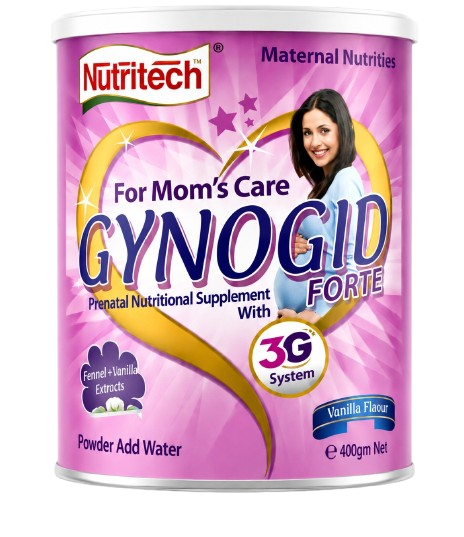
A useful way to think about comprehensive prenatal nutrition is the 3G framework: Go (sustained energy), Grow (nutrients that build the baby), and Glow (nutrients that support maternal wellbeing). Formulas like Gynogid Forte are built around this exact logic, combining folic acid, DHA, calcium, and iron with balanced calories and protein in a single daily serving, rather than asking mothers to juggle multiple separate supplements.

  • Go: Balanced calories that support energy without excessive weight gain.
  • Grow: Folic acid, DHA, calcium, and iron dosed for fetal development.
  • Glow: Supporting micronutrients that help maintain maternal energy and mood through pregnancy.
The 3G Maternal Nutrition Framework

Postnatal Nutrition: Recovery, Lactation, and Replenishment

Nutritional needs don't end at delivery — for many nutrients, they peak afterward. The postpartum body is simultaneously healing from childbirth, replenishing nutrient stores spent during pregnancy, and, for breastfeeding mothers, producing milk that draws directly on maternal reserves.

  • Iron replenishment: Blood loss during delivery can leave iron stores depleted; ongoing intake supports recovery from fatigue.
  • DHA for lactation: Breast milk DHA content reflects maternal intake, directly supporting infant brain development.
  • Calcium continuation: Breastfeeding draws on maternal calcium stores; continued intake protects bone density.
  • Extra calories and protein: Milk production is metabolically demanding and requires sustained energy intake.
  • Hydration: Milk supply is sensitive to maternal hydration status.

Common Maternal Nutrition Mistakes to Avoid

  • Stopping supplementation right after birth: Postnatal needs are often as high as prenatal ones, especially for breastfeeding mothers.
  • Relying on folic acid alone: A complete prenatal nutrition plan also needs DHA, iron, and calcium, not folate in isolation.
  • Treating nausea as a reason to skip nutrition entirely: Smaller, more frequent intake — including nutrient-dense liquids — often works better than forcing large meals.
  • Ignoring protein intake: Protein needs rise substantially in the second and third trimesters and are easy to underestimate.

When to Talk to Your Healthcare Provider

Every pregnancy carries its own nutritional risk profile, shaped by pre-existing conditions, dietary restrictions, multiple pregnancies, and genetic factors like MTHFR variants that affect folate metabolism. A healthcare provider or registered dietitian can personalize dosing — particularly for iron and DHA, where needs vary widely between individuals.

FAQs About Maternal Nutrition

Do prenatal nutrition needs change after the first trimester?

Yes. While folate is most urgent early on, calcium and iron demand rises through the second trimester, and DHA and protein needs peak in the third as fetal growth accelerates.

How long should I continue prenatal supplementation after birth?

Most healthcare providers recommend continuing through the postpartum period, especially while breastfeeding, since milk production draws directly on maternal nutrient stores.

Can poor maternal nutrition affect the baby long-term?

Research on fetal programming suggests maternal nutritional status during pregnancy can influence a child's long-term metabolic health, which is why consistent, comprehensive nutrition matters throughout pregnancy.

Is it safe to combine a prenatal multivitamin with a separate DHA supplement?

Generally yes, but always check combined dosing with your provider to avoid exceeding recommended limits for fat-soluble vitamins like A and D.

What's the difference between prenatal and postnatal nutrition needs?

Prenatal nutrition is focused on supporting fetal development as it happens. Postnatal nutrition shifts toward maternal recovery and, for breastfeeding mothers, sustaining milk production — both remain nutritionally demanding.

Can diet alone meet maternal nutrition needs without supplements?

It's difficult for most people. Nutrients like folate and DHA are needed in amounts that are hard to consistently reach through diet alone, which is why supplementation is broadly recommended during pregnancy and lactation.

Conclusion: Nutrition as a Continuous Thread, Not a Phase

Maternal nutrition works best when treated as a continuous thread running from preconception through breastfeeding, rather than a box to check during pregnancy alone. Comprehensive formulas built on frameworks like 3G — providing folate, DHA, calcium, iron, and balanced calories together — make it easier to meet these shifting needs consistently, supporting both a healthy pregnancy and a strong recovery afterward.